




Being Together with Strangers
Not Wanted on the Rue Saint-Denis
The Life of the Whanganui River
To read full article please order Issue 02 here.
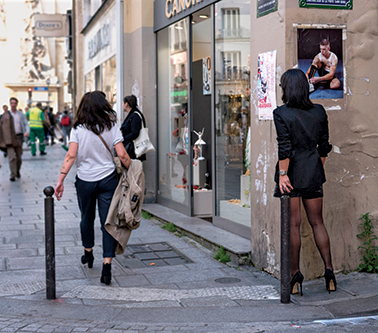
the Rue Saint-Denis
It’s a February evening and a meeting is being held at the town hall of the 2nd arrondissement in Paris. A resident stands to speak. “We thought gentrification was under way,” she says, “and that it would eliminate prostitution. Can we expect to see an end to prostitution in this neighbourhood?” The debate was launched.
To read full article please order Issue 02 here.

A photo essay, by Vittoria Zupicich, examining the relationship between architecture and the people who unconsciously affect it.
To read full article please order Issue 02 here.
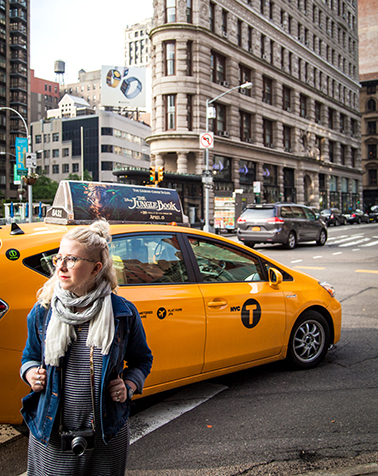
Think about planning a trip to a foreign city. Maybe it’s to a city in your home country or a far-off land where you don’t speak the language. You book your hotel and look up things to do before setting off on your journey. However, upon landing at the airport, you realize that signs are difficult to understand and finding the local transportation is challenging.
To read full article please order Issue 02 here.

The second act of the play is wrapping up; intermission is coming. I brace myself. The house lights brighten, and I am off, weaving around sauntering fellow theater-goers, past the lobby, and screeching to a halt at the end of the women’s restroom line.
To read full article please order Issue 02 here.
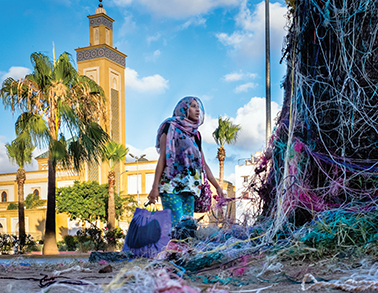
How do you get to know a city? Is it in bits and pieces in the form of little pockets of space? Or in the stories the city produces, either directly or indirectly? These questions were my constant companions during my time in Casablanca. In my apartment, during the pauses in my writing, the noise beneath my balcony prodded my psyche. The sound of gridlock, heat, and despair begged answers to the question of how we come to know a place.
To read full article please order Issue 02 here.

Whanganui River
It was winter, August 10, 2010; a cold, still day. Two days earlier, the Whanganui, a river that runs from the centre of the North Island of New Zealand to the west coast, had been in flood. As we parked outside Pipiriki Marae, a ceremonial centre, mist drifted across the hills behind the little red and white meeting house, its red ensign flag fluttering in the breeze. After the local Maori people formally welcomed us onto the marae, we shared a meal in the dining hall and then joined them inside the meeting house.
To read full article please order Issue 02 here.

In late 2014, Mark Zuckerberg sauntered past a hand-painted sign on a side street in Indonesia, which read “Welcome to Kampoeng Cyber” (Welcome to Cyber Village). The Facebook magnate had heard about, and decided to visit, a small urban neighbourhood of about 150 people that had become modestly famous for having used its own funds to connect almost all of its residents to high-speed internet.
To read full article please order Issue 02 here.
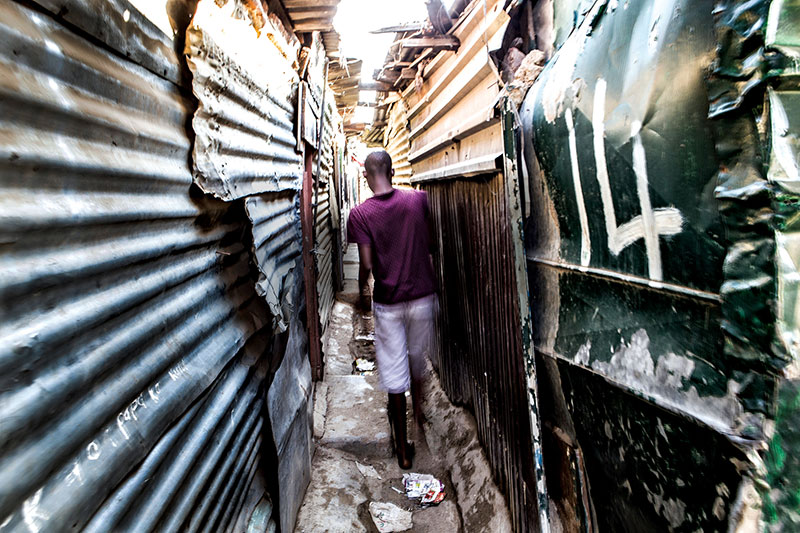
Barbara Heer examines urban anxieties in post-Apartheid Johannesburg, where residents confront social inequality in their shared spaces.
To read full article please order Issue 02 here.

An interview with Airbnb’s Director of Research, Judd Antin. In the ten months he has been at Airbnb, Judd Antin has made a lot of things happen. He has put together a team that includes everyone from customer experience specialists, to ethnographers, to survey scientists. This mixture of methods and perspectives has yielded practical results and actionable strategies that have kept Airbnb in touch with the needs and desires of its hosts and guests. This is all a part of Judd’s plan to thread the company together with robust research on every angle with every source of data available, bringing research insights to every part of Airbnb’s operations and turning feedback into products.
To read full article please order Issue 02 here.
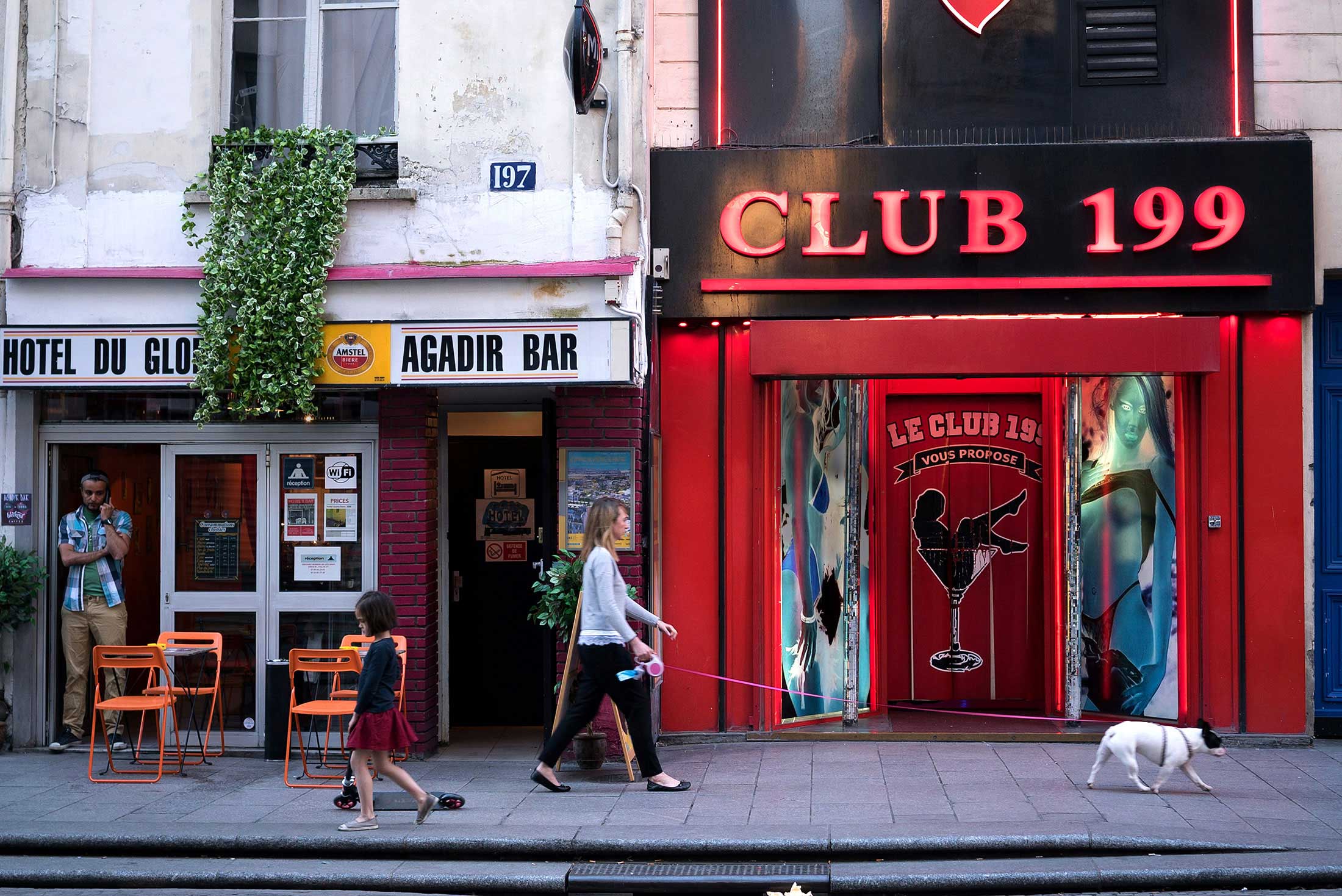
When gentrification in Paris faces off against a historic street that has served as the heart of Paris’ sex trade, a french anthropologist asks: “Is prostitution, or the attempt to eradicate and normalize it, the deviant influence?”
To read full article please order Issue 02 here.
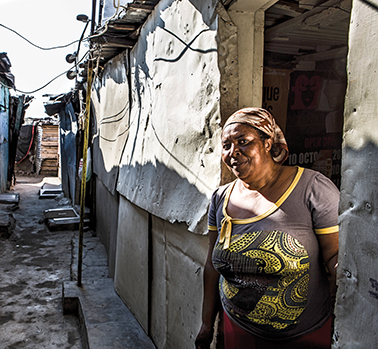
Post-apartheid Johannesburg is often misunderstood as a city lacking connections across divided spaces and lifeworlds. If we pay close attention to urban everyday life, though, we can see that people living in the city are engaged in constant creation and appropriation of social spaces. Some of these spaces serve for social enclosure, but others also for social encounters.
To read full article please order Issue 02 here.
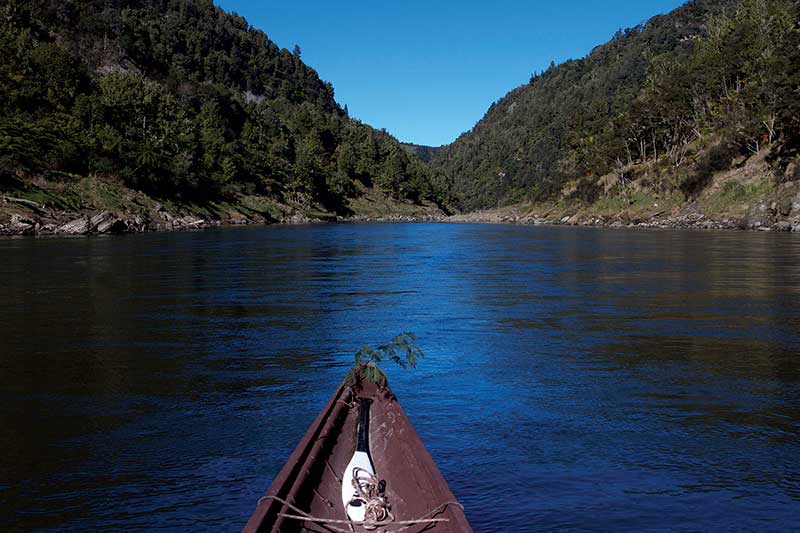
Dame Anne Salmond tells the story of why the Moauri people of the Whanganui River obtained legal recognition as a living being by the state.
To read full article please order Issue 02 here.
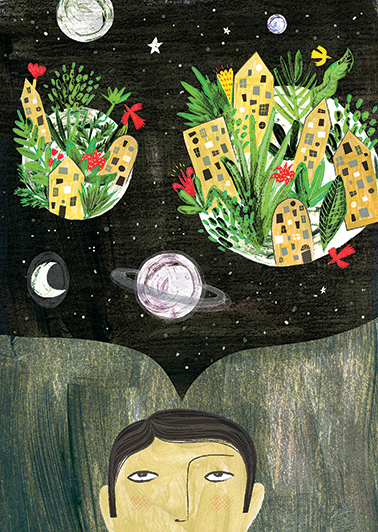
What images come to mind when you think of a future that includes human beings living in outer space? Do you think about enormous colonies drifting through the cosmos in structures built with futuristic metals and expansive solar panels, rotating to provide gravity for the occupants inside? Do you think about domed habitats on Mars—tucked gently inside of a crater or against a cliff face in order to stay safe from Martian sandstorms—complete with greenhouses and giant all-terrain vehicles pockmarked throughout the settlement so you can roam the rocky surface?
To read full article please order Issue 02 here.

“So this is like a mushroom, it pops up? A creative mushroom. I love it!” enthused the woman in her forties, dressed from head to gumboots in orange. She had just emerged from the Situated Cinema, a ‘demountable micro-cinema’ that was moving around Winnipeg for the four days of WNDX, an experimental film festival.

I first met Hu in 2009. A computer programmer by trade, Hu was earning a middle-class salary by Chinese standards. He was single and rented a room in downtown Hangzhou, a major urban city along the coast of China. Altogether he appeared to have a vibrant social and family life, happily living the modern Chinese dream. By late 2012, he had a revelation of a different sort. Hu proudly told me that he had finally figured it out. In a nation of winners, he was a loser. —Nominated for Best Non-Fiction Story, Stack Magazine Awards, 2016 —Winner, Canadian Magazine Awards, 2017
To read full article please order Issue 01 here.

When I see a person reading in public I always wonder: what are you trying to learn from that book and what are you trying to learn about yourself?

With 930 million mobile phone subscribers—a million of whom were added in March 2014 alone—India is easily one of the world’s largest and fastest growing mobile markets, sandwiched between China and the United States. Robin Jeffrey and Assa Doron’s chronicle of the impact of cell phone diffusion in India in Cell Phone Nation (Hachette, 2013) confirms that much of mobile’s exponential market growth has been driven by the increasingly ubiquitous “cheap cell phone,” which made the technology accessible to workers and their bosses like.Life in India would never be the same.
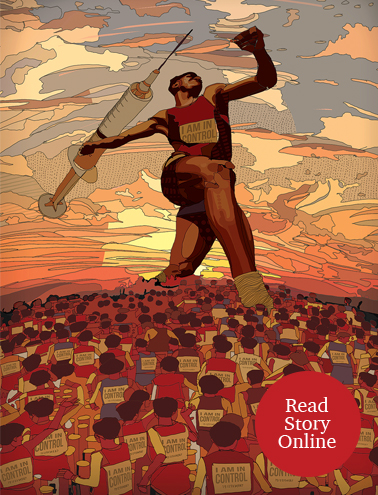
Three days a week, David wakes up, showers, dresses, and plunges a needle into a vein. He’s been doing this since he was a child. He does this three days a week, for fifteen minutes, because if he doesn’t, a fall or scrape can land him in the hospital. This needle is a reality he’s lived with all 22 years of his life and one he will carry with him until his final days. This ritual of the needle is a constant. It is, and always has been, a symbol of who he is. It has defined his life. He has hemophilia.
To read full article please order Issue 01 here.
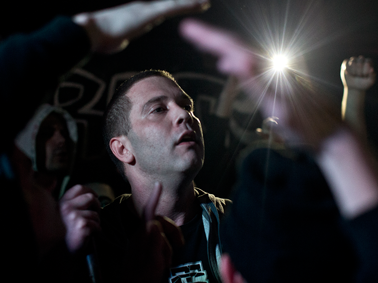
“If this was in English it would be a mega hit. I can’t stop playing it. It’s spinning in my head all day long.” This was the response of Toronto hip hop beat-maker Kyd Alchemy (aka Justin Sousa) after he listened to a mixtape CD of Serbian hip hop I had put together for his listening enjoyment and critical assessment. Though the beats, the slick production, and the mixes of Serbian hip hop sound like they could have been manufactured by Dr. Dre or Ryan Lewis, what is distinctive about Serbian hip hop is how it uses verse, rhyme, song structure, wordplay and vocal timbre to attract attention to a message, using beats ranging from “the rawest hardcore to the slickest contemporary hip hop,” to quote Kyd Alchemy.
To read full article please order Issue 01 here.

In the moments before she signs on to our virtual interview, I imagine Microsoft’s Senior User Experience Researcher and Sociologist sitting down at her computer, mentally preparing to have yet another conversation about the unique nature of her work. Sam is a busy woman. In addition to doing her job, she is constantly having to explain it. What exactly does a sociologist do at Microsoft?
To read full article please order Issue 01 here.

As a young anthropologist with PhD aspirations, the task of choosing a fieldsite in which to commit at least a year of your life is, as you may imagine, no easy feat. Compelled to venture far from home in order to earn my proverbial stripes, I spent a solid month staring at maps and imagining myself living in every corner of the globe.
To read full article please order Issue 01 here.

For over 60 years, Colombia has been burdened by a series of enmeshed conflicts characterised by civil war, on-going Guerrilla conflicts and drug cartel violence. Throughout these conflicts, the city of Medellín has been a protagonist; a battleground for drug cartels and paramilitaries or a host receiving rural communities fleeing from fighting. In recent years, however, Medellín has been recognised internationally for its successful urban development and social transformation.
To read full article please order Issue 01 here.

She holds a hand up towards her face, fingers aligned like a gun, and her dark hair frames strong cheekbones that shift and lock as she chews gum and clicks her tongue against her teeth. Heavy base vibrates into the background of the video clip as another woman appears on screen and another; one after the other dancing in front of the grainy black and white lens.
To read full article please order Issue 01 here.

Cultural anthropology is a discipline that investigates all aspects of human societies. Personally, I have always been interested in the exploration of the ways objects are made and used by people to express a personal and collective identity.
To read full article please order Issue 01 here.
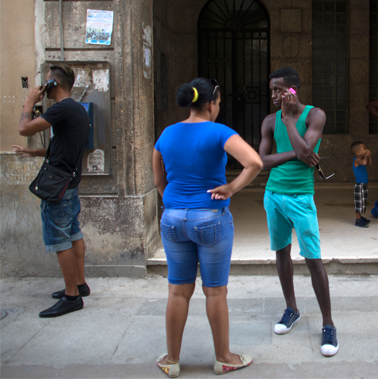
A few days ago, I called a friend in Cuba to wish her a happy birthday. Her greeting had the familiar joy and ebullience characteristic of her personality. Without missing a beat, she then told me about her immediate situation.
To read full article please order Issue 01 here.

Anthropology is a field of inquiry not only focused on the far away and remote, on the exotic practices of mysterious others. Anthropologists also turn our eye on the society within which we live.